
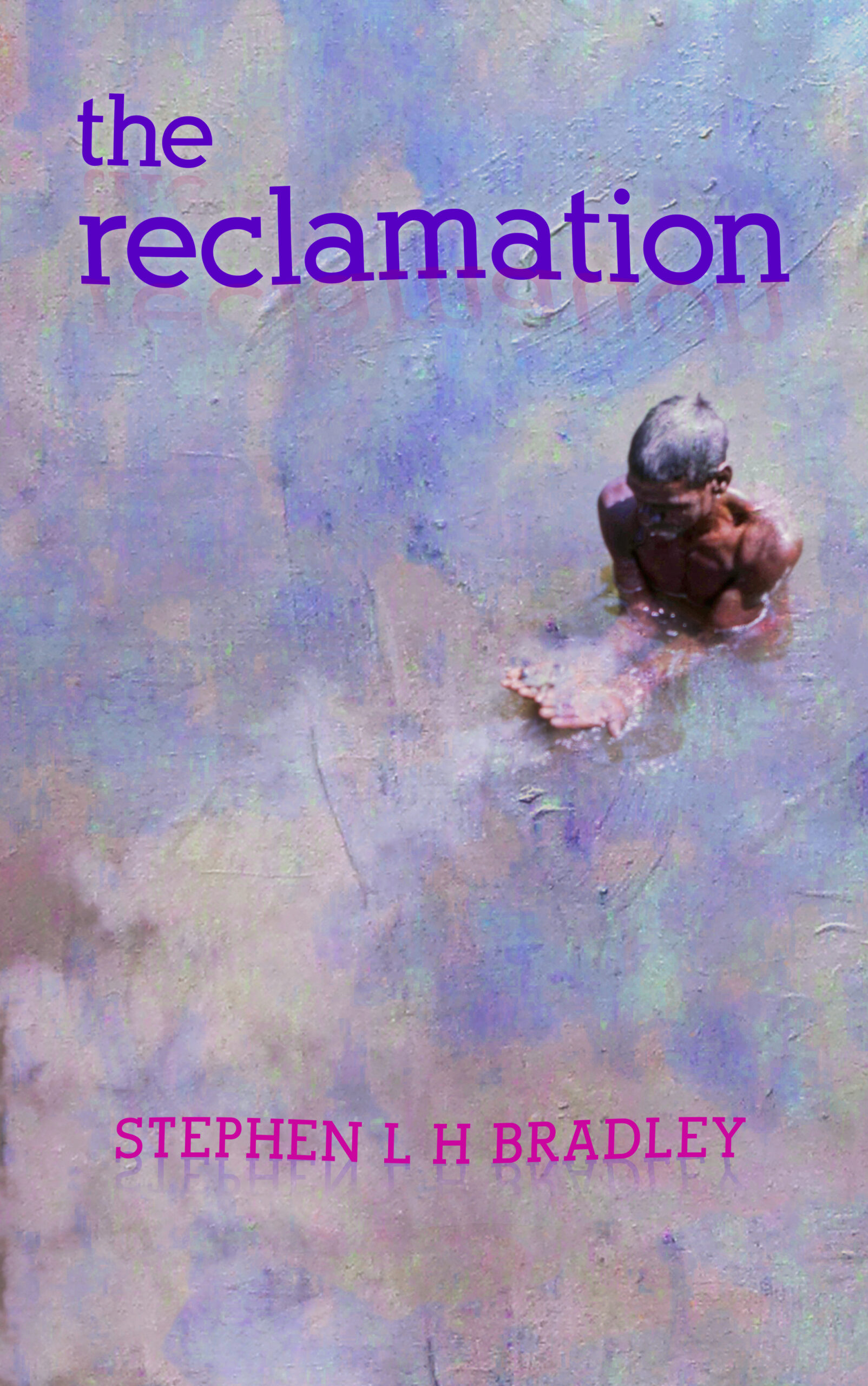
The Reclamation
Written: 2000
A Novel
Written at the turn of the millennium, The Reclamation marked a significant step in the development of my creative process. Although it began from a single narrative idea, the work gradually evolved into a journey through memory, grief, imagination and place. At its heart lies an act of reclamation: the return of important figures from my own life — my father Bob, my grandfather Basil and my friend Pete — not as memories alone, but as living presences within the story itself.
The book also contains one of the earliest expressions of the creative method that would later shape the White Island novels. Rather than following a predetermined plot, I allowed the work to reveal itself as it unfolded, becoming both author and audience to the story. In many ways, The Reclamation stands at the threshold between my earlier writing and the body of work that followed.
A good way to describe the making of The Reclamation is to quote an excerpt from the Artist Statement from my 2013 exhibition, She Dreams of Liberation:
‘Since 2000 I have written two unpublished novels: The Reclamation (2000) and White Island (2002), both consciously utilising the discipline of the stream of consciousness process I now call ‘streaming’. To safeguard the authenticity of the written works I have imposed a strict set of rules: The works are entirely unplanned, they begin and I follow them; I am not selective about what I write – I write down everything I see, in the order that it appears; I have trained myself to not think about the story when I am not streaming, but if my mind wanders to it when I am not writing, I consciously focus on something else; I do not add, embellish or delete; the only changes made are spelling, grammatical and formatting.
These written works are therefore driven by a pure narrative flowing from my subconscious, combined with commentary from my conscious mind. As with our dream world, where the part of the brain that creates and projects the narrative and the part that views it are entirely separate, the same is true of streaming. The integrity of the piece is dependent on the conscious mind playing no part in creating the narrative.’